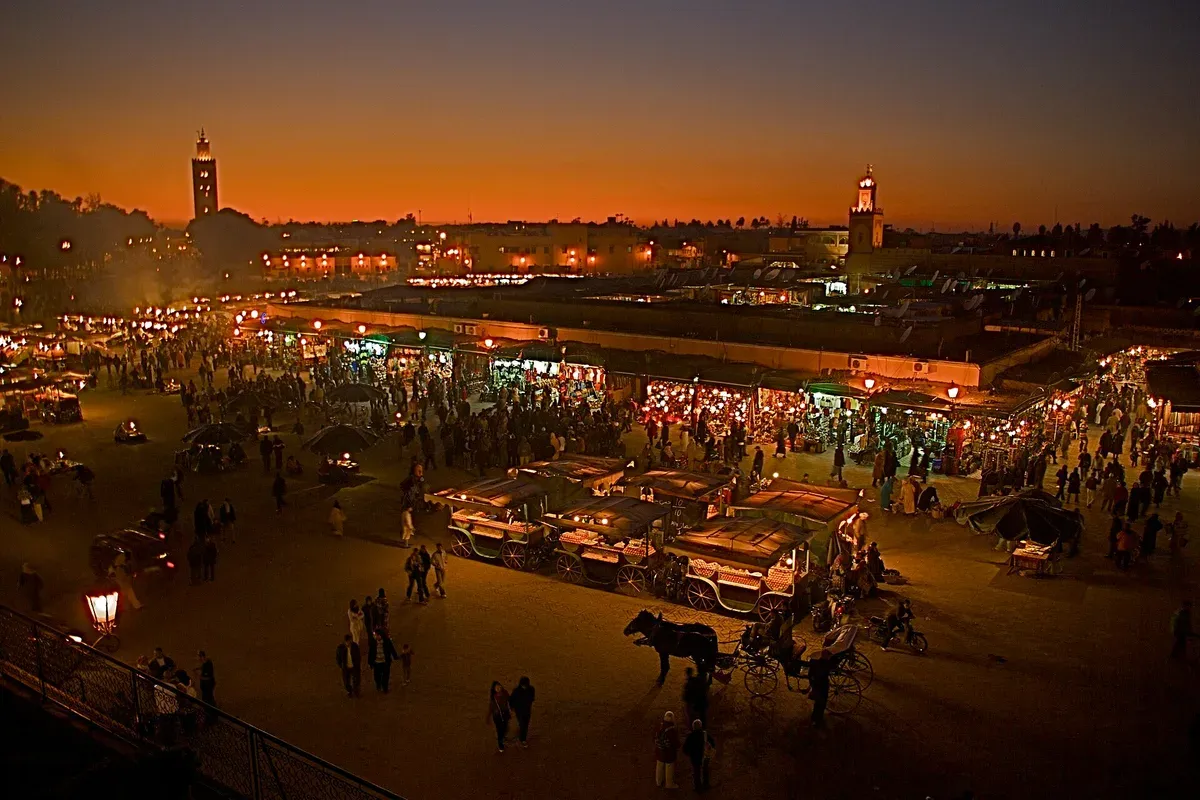
Behind nineteen kilometers of rose-earth ramparts, the medieval Medina of Marrakech unfolds as a living labyrinth organized not by street signs, but by craft guilds (corporations) and neighborhood landmarks. Step off Jemaa el-Fnaa before 9:30 AM and the frantic scooter traffic gives way to quiet moments: bakers sliding flat khobz loaves onto wood-fired communal ovens (ferran), metalworkers hammering brass lanterns in Place des Ferblantiers, and mint sellers unloading fragrant bundles at Rahba Kedima spice square.
Understanding how Marrakech’s kitchens and artisan quarters work turns what can feel overwhelming at first into an immensely rewarding cultural study.
Reading the Medina by Craft Guilds
Inscribed on the UNESCO World Heritage List, Marrakech’s northern souks follow traditional trade zones radiating away from the Ben Youssef Mosque:
- Souk Semmarine & Souk el-Attarine: Textiles, copperware, and historic spice and perfume traders closest to the main thoroughfare.
- Souk Haddadine: Blacksmiths shaping wrought-iron window grilles and lantern frames by hand.
- Souk Cherratine & Bab Debbagh Tanneries: Traditional leather dyeing pits along the eastern ramparts (visit only with a clear agreement or reputable local guide; skip “closed street” detours offered by unsolicited strangers).
- Ensemble Artisanal (Avenue Mohammed V): A government-regulated fixed-price craft complex outside the deep souks—ideal on Day 1 for learning genuine quality and fair baseline prices before bargaining inside the medina.
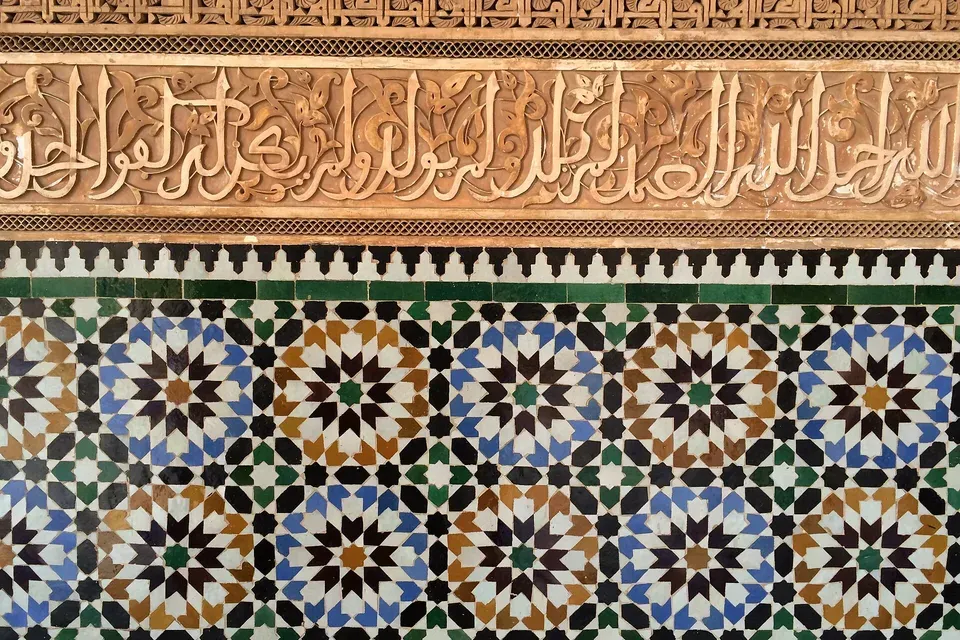
Architectural Highlights Worth Slowing Down For
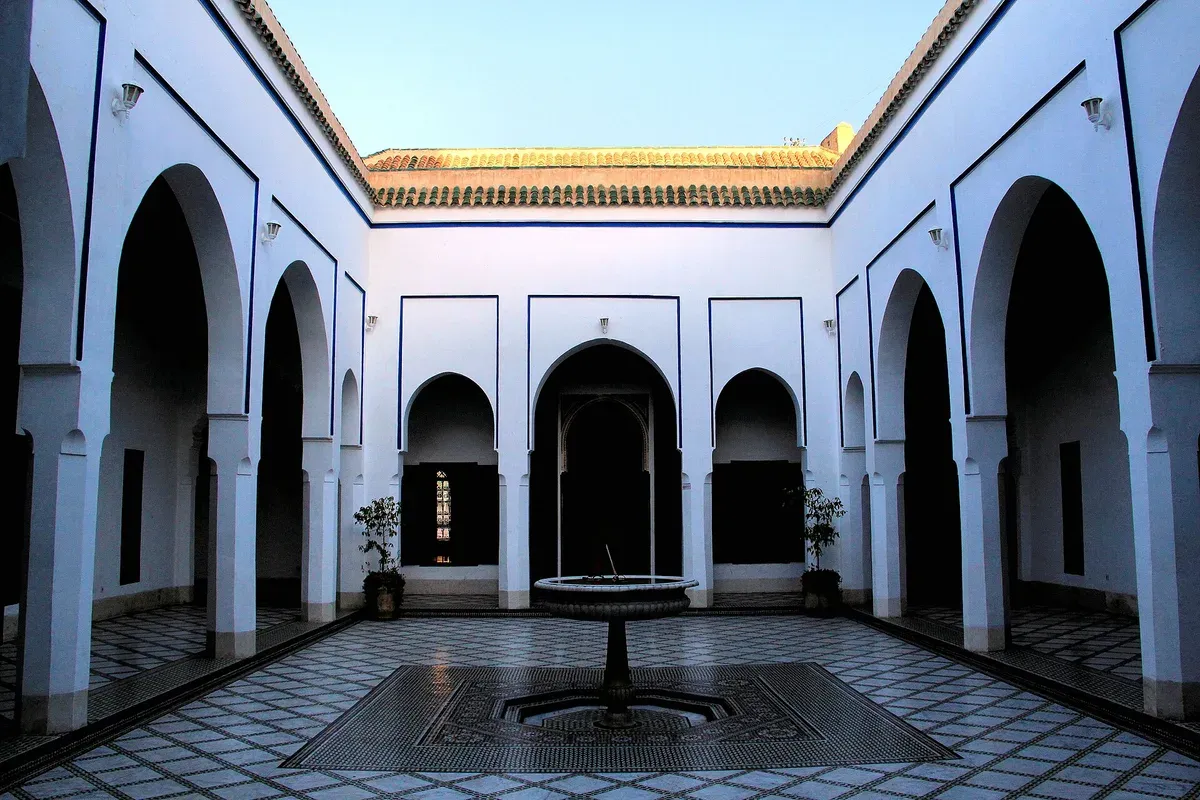
Reserve quiet morning hours for Ben Youssef Madrasa (a sixteenth-century Islamic theological college whose central marble pool mirrors geometric zellij mosaics), the Saadian Tombs beside the Kasbah Mosque, and the nineteenth-century Bahia Palace, whose painted cedar ceilings and cool orange-tree courtyards illustrate traditional Moroccan climate design.
Check official cultural site schedules via the Moroccan National Tourist Office.
Moroccan Kitchen Traditions: Beyond Tourist Tagines
Real Moroccan cooking happens slowly over glowing charcoal braziers (kanoun) or inside communal neighborhood ovens, balancing preserved lemons, saffron, ras el hanout, olives, and dried fruit.
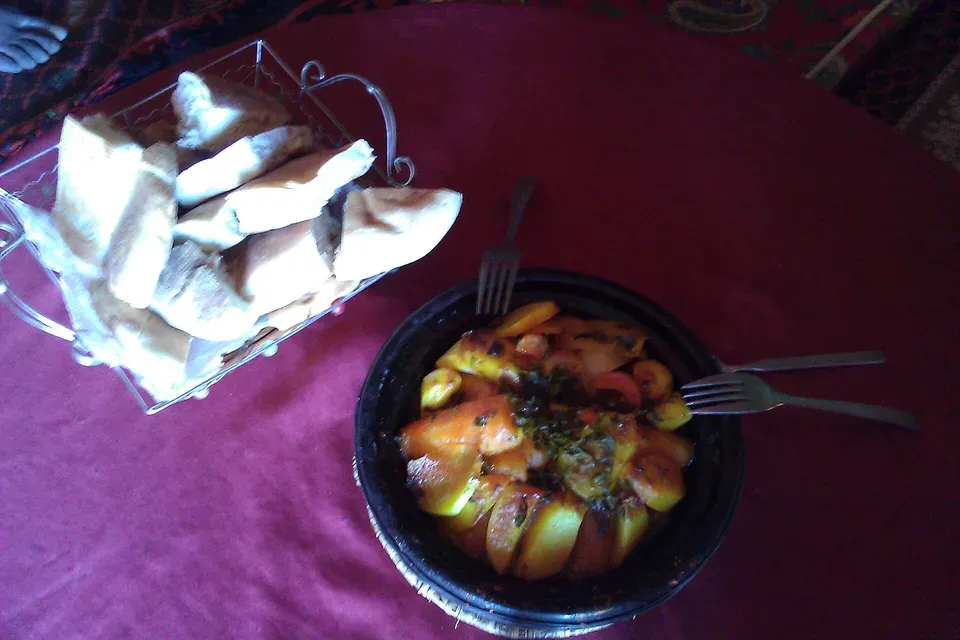
- Tanjia Marrakchia: Marrakech’s signature working-class dish—slow-braised beef or lamb sealed with cumin, saffron, smen (aged butter), and preserved lemon inside an amphora jar buried in the warm embers of a public hammam furnace for five hours.
- Slow-Cooked Tagines: Look for small neighborhood mahlabas and side-street eateries where conical earthenware lids lift to reveal tender lamb with prunes and toasted almonds, or chicken with green olives and preserved lemon.
- Mint Tea (Atay) & Pastries: Green gunpowder tea steeped with fresh spearmint and sugar—poured from high above the glass to build a frothy crown—paired with almond-filled kaab el ghazal (gazelle horns).
Navigating Fairly and Respectfully
| Practical Detail | Typical Cost (MAD) | Smart Advice |
|---|---|---|
| Ben Youssef / Bahia Palace entry | 70–100 MAD (~$7–$10 USD) | Arrive right at opening (9:00 AM) to photograph courtyards calmly |
| Neighborhood tanjia or tagine lunch | 55–110 MAD (~$5.50–$11) | Dine near Bab Doukkala or Mellah away from Jemaa el-Fnaa touts |
| Fresh orange juice on Jemaa el-Fnaa | 10–15 MAD (~$1–$1.50) | Confirm price before drinking; watch out for scooters in narrow alleys |
| Petit taxi across Gueliz / Medina gates | 20–40 MAD (~$2–$4) | Always insist the meter (compteur) is switched on upon boarding |
Dress modestly out of respect for residential alleys, ask politely before photographing shopkeepers or artisans, and never follow strangers claiming “the square or tannery is closed today.”
Suggested Three-Day Marrakech Cultural Rhythm
- Day 1 — Architecture & Fixed-Price Baseline: Tour Bahia Palace and the Saadian Tombs at morning opening, visit Ensemble Artisanal outside the medina to calibrate quality and craft prices, explore Majorelle Garden or Le Jardin Secret in late afternoon, and watch Jemaa el-Fnaa transition from snake charmers to smoking grill stalls at dusk.
- Day 2 — Northern Guild Souks & Ben Youssef: Enter the covered souks early via Souk Semmarine, visit Ben Youssef Madrasa and Maison de la Photographie, lunch on tanjia near Place des Ferblantiers, and unwind with a traditional eucalyptus savon noir scrub at a historic neighborhood hammam.
- Day 3 — Atlas Foothills or Culinary Workshop: Spend a morning cooking class starting with market vegetable shopping in the medina, or escape midday heat with a day excursion up into the Ourika Valley or Imlil walnut groves in the High Atlas foothills ninety minutes south.
Bargaining Without Stress
Bargaining in Marrakech’s craft souks is expected social theater rather than confrontation. Only begin negotiating for rugs, leather bags, or brassware if you genuinely want the item; inspect stitching, natural dyes, and weight carefully, smile, propose roughly forty to fifty percent of the opening quote, and walk away cheerfully if a price exceeds what the piece is worth to you.
Planning where to stay inside the walls? Read our guide to choosing riads vs. Ville Nouvelle hotels in Morocco.