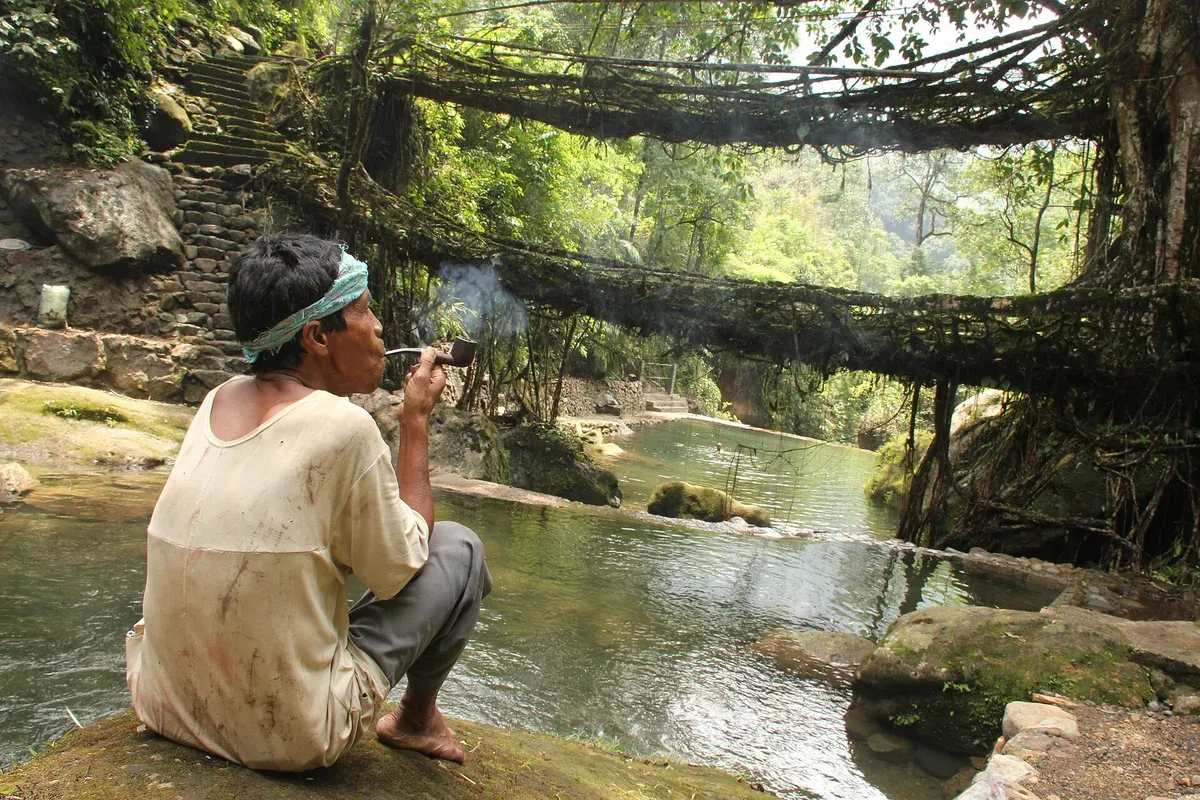
Rising abruptly above the floodplains of Bangladesh in Northeast India, the Khasi and Jaintia Hills of Meghalaya trap warm Bay of Bengal moisture against sheer sandstone escarpments. Over centuries, that rainfall carved deep misty canyons, expansive limestone cave networks, and lush subtropical gorges where Khasi and Jaintia villagers developed one of the world’s most extraordinary forms of bio-engineering: Jingkieng Jri, or living root bridges.
Rather than felling trees to span torrential monsoon streams, local caretakers guide the aerial roots of Ficus elastica (Indian rubber fig) across hollowed betel-nut trunks until the living fibers anchor into the opposite bank—growing stronger with every decade rather than rotting in humidity.
Best Season for Trails, Rivers, and Caves
- October to December: Post-monsoon air clears dramatically, waterfalls still carry strong flow, and the Umngot River at Dawki turns glassy transparent.
- January to April: Best window for guided limestone caving and dry stone-step trekking to Nongriat and Mawryngkhang, though seasonal falls shrink by March.
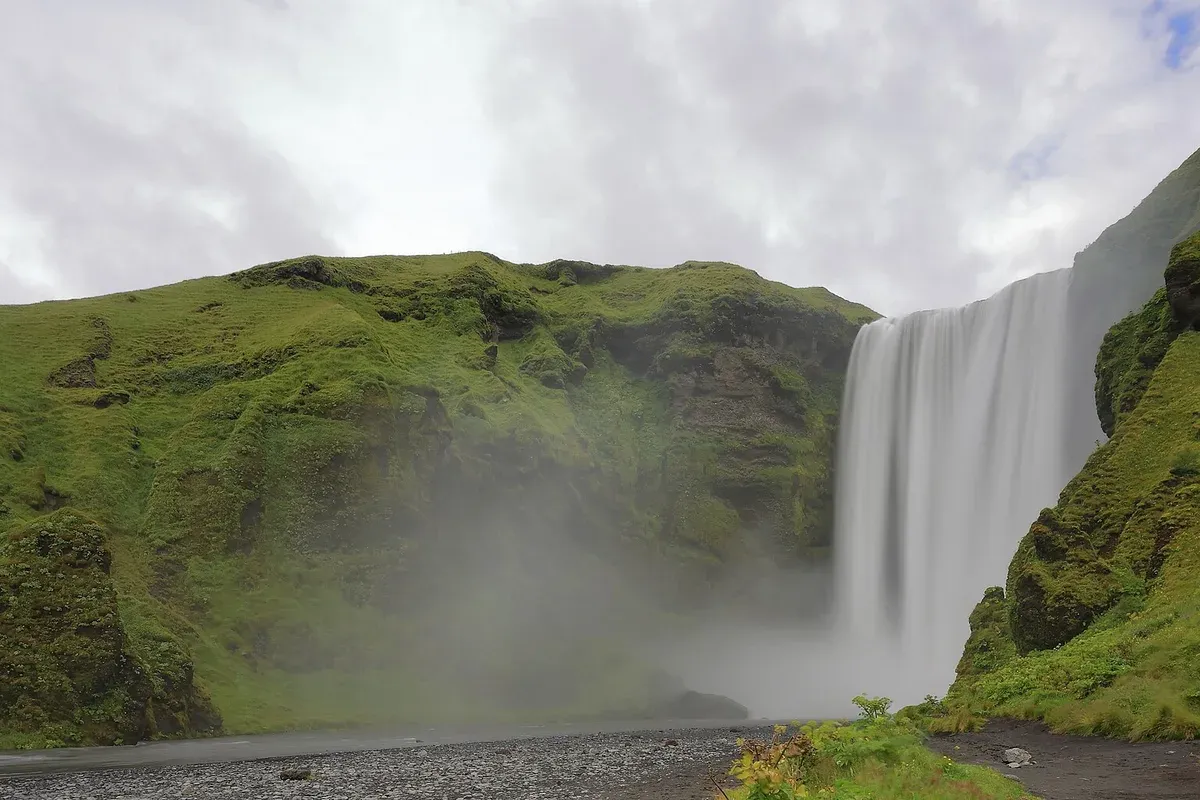
- June to September: Heavy rains around Sohra (Cherrapunji) and Mawsynram unleash thundering cliffside cascades, though dense mist frequently hides canyon views and stone steps grow slick.
Verify conservation guidelines and homestay listings with Meghalaya Tourism.
Key Outdoor Experiences Across Meghalaya
1. The Trek to Nongriat’s Double-Decker Root Bridge
Starting from Tyrna village south of Sohra, the stone staircase drops roughly 3,500 steep steps through betel-nut groves and swaying wire suspension bridges to Nongriat (1.5 to 2 hours down; 2 to 3 hours back up). Do not treat this as a rushed midday dash: spending one night in a simple village homestay in Nongriat lets you reach Rainbow Falls—an extra hour uphill along forest streams—in quiet early-morning light before day-trippers descend.
2. Sohra Escarpment Waterfalls and Canyon Trails
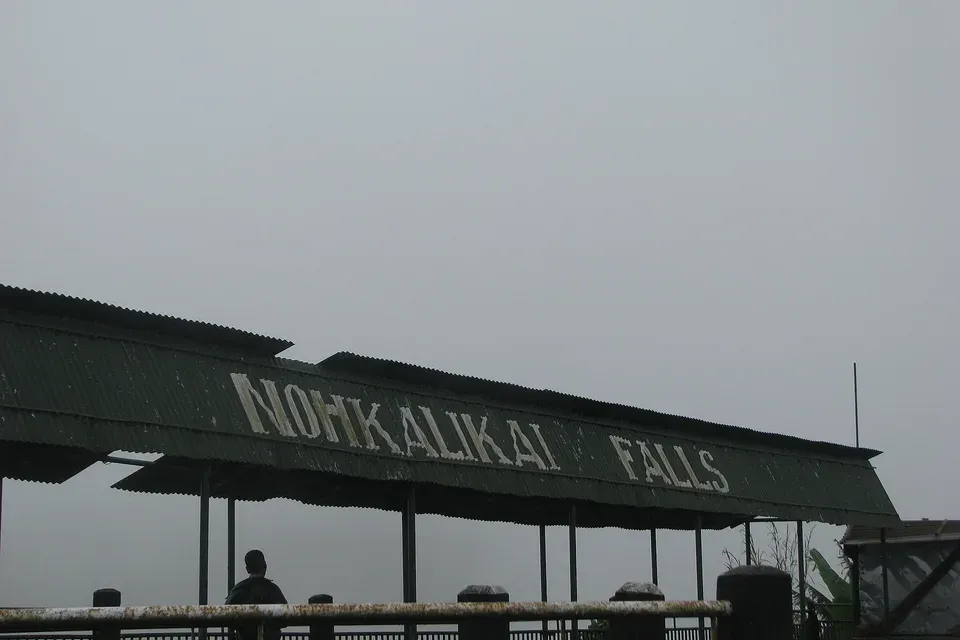
Around Sohra, steep plateaus drop straight into dramatic emerald ravines. Nohkalikai Falls plunges 340 meters off a rocky cliff lip, while Wei Sawdong (a three-tiered turquoise cascade) and the David Scott Trail—a historic 16-kilometer mule track connecting Mawphlang and Lad Mawphlang—offer satisfying half-day walks across rolling highland grasslands.
3. Limestone Caving and Dawki’s Umngot River
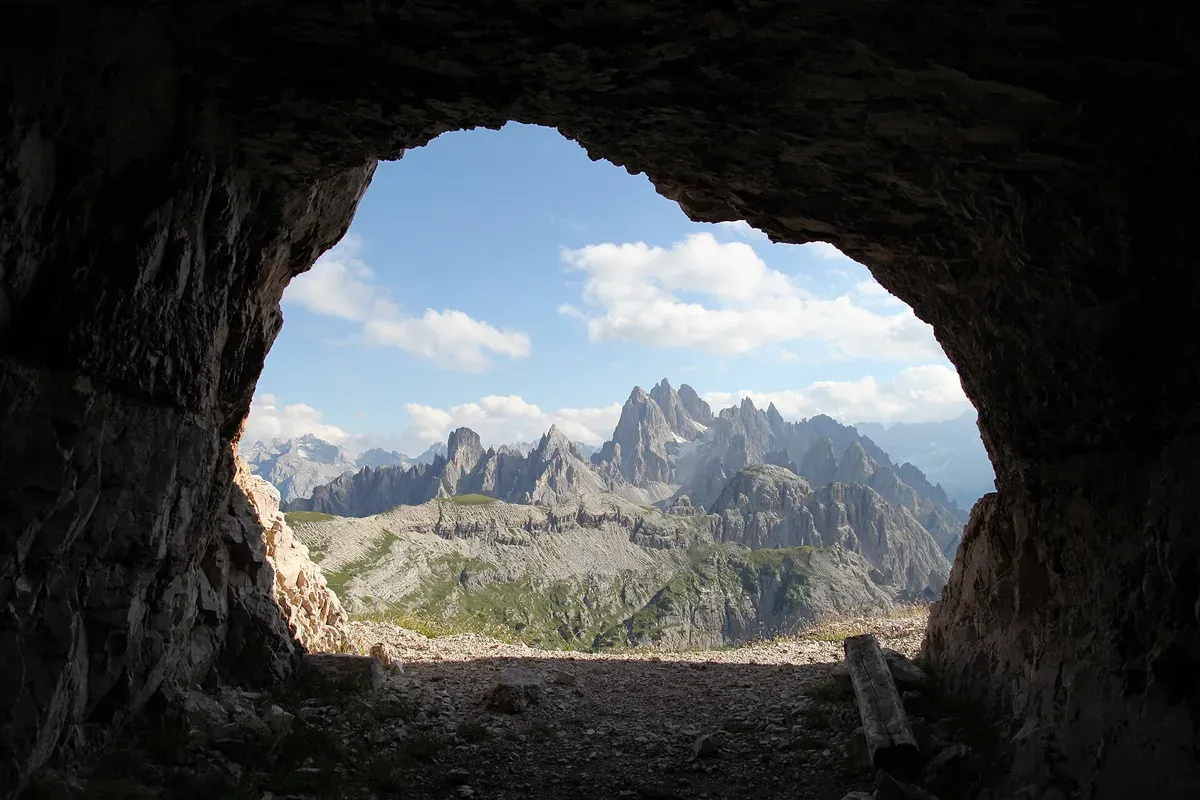
Meghalaya contains some of India’s longest limestone cave systems, including Krem Mawmluh and Krem Liat Prah in the Jaintia Hills. While casual visitors can walk illuminated paths inside Mawsmai Cave near Sohra, true horizontal and wet cave expeditions require certified caving guides, helmets, headlamps, and strict conservation rules—never enter wild caves unguided, especially near rainy months when flash flooding occurs rapidly.
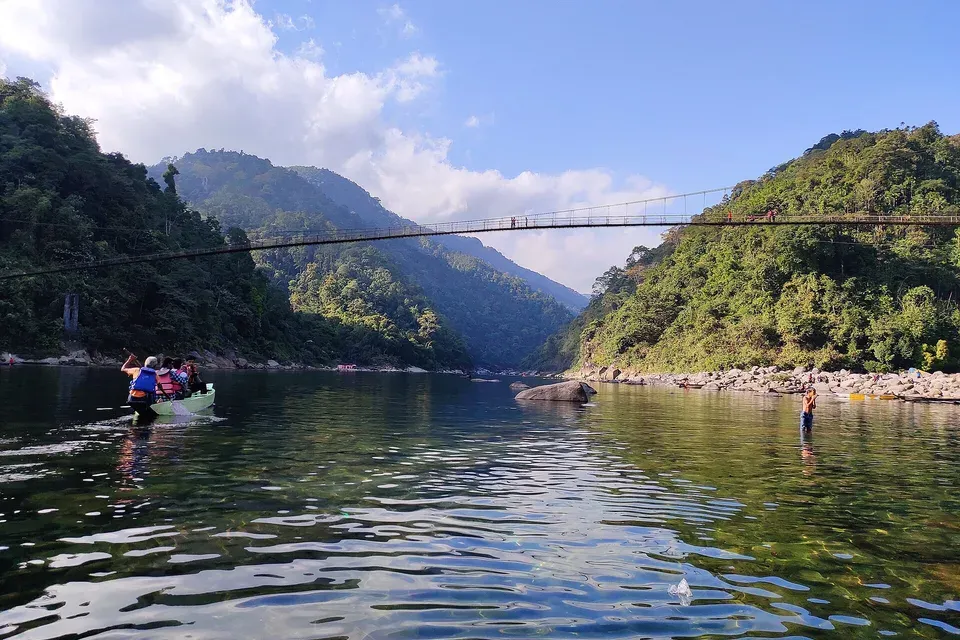
Further south along the border foothills, Shnongpdeng (just upstream from Dawki) offers calmer kayaking, cliff-jumping, and riverside camping over the remarkably clear Umngot River without Dawki’s noisy main boat landing.
Practical Logistics, Permits, and Trail Prep
| Detail | What to Know |
|---|---|
| Getting there | Fly into Guwahati (GAU) or Shillong (SHL); shared sumo cabs or private taxis reach Shillong in 3 hours |
| Footwear & gear | Quick-dry trail shoes with wet-rock grip, knee sleeves for long stairs, and light rain poncho |
| Cash & ATMs | Carry adequate cash from Shillong or Sohra; Nongriat and Shnongpdeng lack reliable ATMs/card machines |
| Leave No Trace | Use local village guides, avoid soaps in forest pools, and carry out all plastic bottles |
| Typical homestay cost | ₹1,000–₹2,200 INR per person including simple Khasi meals (jadoh, lentils, greens) |
Suggested Five-Day Active Meghalaya Circuit
- Day 1 — Guwahati to Shillong & Laitlum Canyons: Drive up through Barapani (Umiam Lake) into Shillong, pausing for Khasi red-rice lunches and an afternoon walk along the sweeping grassy cliffs of Laitlum Canyons before sunset.
- Day 2 — Mawphlang Sacred Grove & Sohra: Walk the quiet Mawphlang Sacred Forest with a Khasi village guide (respecting the centuries-old rule against removing even a fallen leaf), then continue across misty plateaus to Sohra for Nohkalikai and Wei Sawdong falls.
- Day 3 — Descent to Nongriat Village: Start down from Tyrna by 7:30 AM, cross the Double-Decker Root Bridge, cool off in turquoise forest pools, and settle early into a Nongriat homestay.
- Day 4 — Rainbow Falls Dawn Hike & Ascent to Dawki/Shnongpdeng: Hike upstream to Rainbow Falls at sunrise before climbing back up the 3,500 steps to Tyrna by late morning; drive southeast down winding escarpments to riverfront camps at Shnongpdeng.
- Day 5 — Morning Umngot River Kayaking & Return: Paddle clear limestone shallows at first light, cross Krang Suri waterfall in the Jaintia Hills if time permits, and return toward Shillong or Guwahati airport.
Cultural Etiquette and Monsoon Safety
Khasi and Jaintia communities follow matrilineal heritage traditions and take pride in immaculate village cleanliness—typified by Mawlynnong and community-managed forest reserves. Always ask before photographing local weavers or village elders, dress modestly away from swimming pools, and carry reusable water bottles filled at homestays rather than discarding plastic along forest paths. Between May and September, check landslide advisories before mountain road legs and carry waterproof dry bags for phones, cameras, and spare socks.
For another dramatic Indian highland adventure, explore our Spiti Valley cold-desert travel guide or read how to pack compactly for humid-to-cool microclimates in our one-bag packing system.