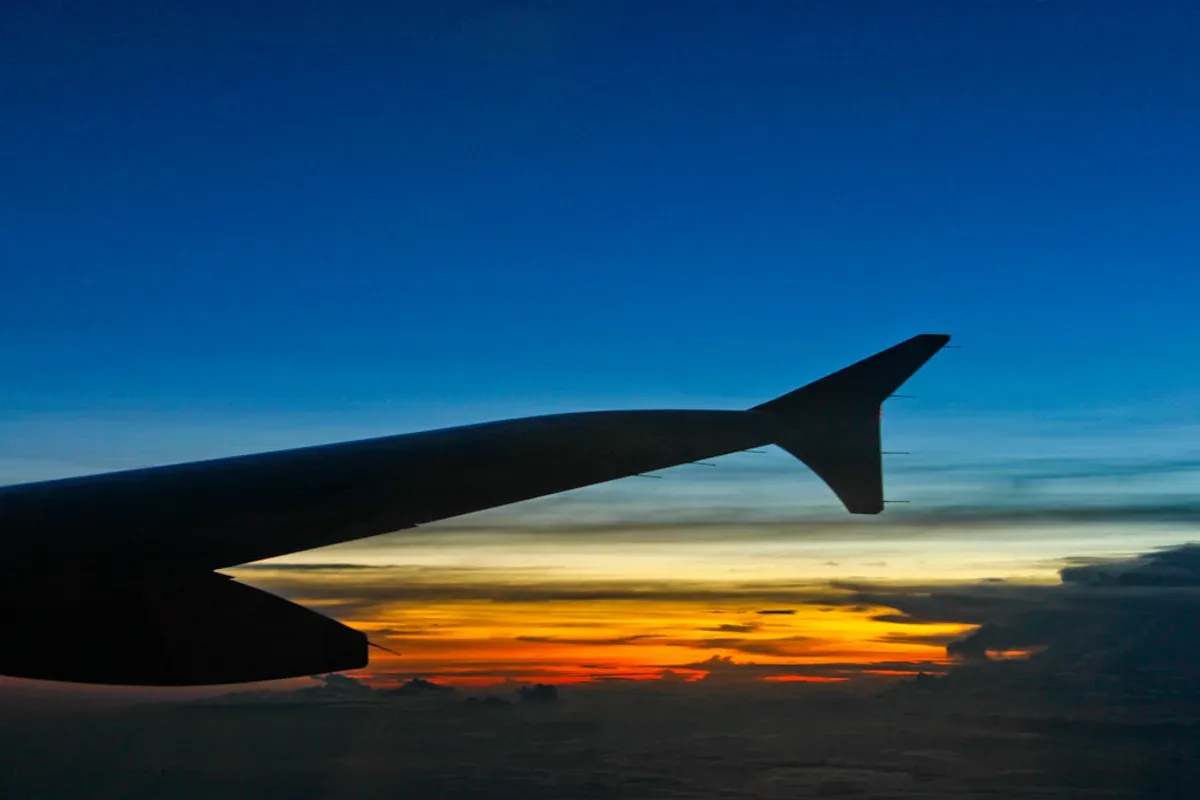
Crossing seven to twelve time zones on a fourteen-hour flight leaves your internal body clock (suprachiasmatic nucleus) temporarily misaligned with local sunrise, mealtimes, and sleep pressure. Many travelers make recovery twice as hard by cramming major museum tickets onto Day 1, chugging cabin wine at 35,000 feet, and pulling window shades shut in bright morning light—accidentally locking fatigue in until Day 4.
Circadian physiology responds reliably to two primary anchors: timed bright light exposure and meal/hydration discipline.
Eastbound vs. Westbound: Why Direction Changes Everything
Flying westward (e.g., Europe to North America, or Asia to Europe) lengthens your day, which feels easier because human circadian clocks naturally drift slightly longer than 24 hours. Flying eastward (e.g., North America to Europe, or Europe to Japan/Australia) compresses your day, forcing you to fall asleep hours earlier than normal—typically taking 50% longer to recover unless you actively manage morning light.
- Flying East: Seek bright outdoor morning light at your destination (after 8:00 AM–11:00 AM local time) and wear dark sunglasses if stepping off an early dawn arrival before 7:00 AM so you don’t accidentally push your clock backward.
- Flying West: Push through late-afternoon fatigue with an outdoor walk in late-day sunlight (4:00 PM–6:30 PM), anchoring bedtime near 9:30–10:30 PM local time.
For evidence-based circadian guidance, review CDC Travelers’ Health notes on jet lag.

In-Flight Cabin Strategy That Actually Works
Aircraft cabins maintain pressure equivalent to ~2,000–2,400 meters elevation with humidity below 15%—closer to an arid desert than sea level.
| Habit | What to Do Onboard | Why It Helps |
|---|---|---|
| Hydration | Drink 250 ml plain water every 90 minutes; carry an empty bottle to fill post-security | Prevents dry-air headaches mistaken for pure fatigue |
| Alcohol & Caffeine | Skip inflight alcohol completely; stop caffeine 8 hours before target sleep | Alcohol fractures REM sleep at altitude and worsens dehydration |
| Seat Selection | Window seats prevent aisle bumps during rest; aisle seats suit daytime legs for stretching | Uninterrupted 4-hour blocks matter more than fitful naps |
| Sleep Kit | Wrap-around blackout eye mask, foam/silicone earplugs, scarf/hoodie | Cabin meal carts and reading lights shatter unmasked sleep |
| Meal Timing | Eat lightly when boarding; shift next full meal to destination breakfast/lunch hour | Gut clocks sync alongside light cues to stabilize circadian rhythm |
How to Pace Your First 24 Hours on the Ground
Treat Day 1 strictly as a low-stakes outdoor orientation day—never schedule timed multi-hour historical tours, high-stakes driving across mountain passes, or early dinner reservations requiring sharp focus.
- Drop bags and walk outside immediately: Even if rooms aren’t ready until 3:00 PM, leave luggage with reception and take a brisk 60-to-90-minute outdoor walk through a city park, riverfront promenade, or botanical garden. Natural daylight suppresses daytime melatonin far more effectively than indoor coffee.
- If you must nap, cap it strictly at 25 minutes before 2:00 PM: Sleeping three hours at noon ruins your first local night and locks in 3:00 AM wakefulness for days.
- Eat dinner at normal local evening hours: Even a light bowl of soup or salad at 7:30 PM signals your digestive system that evening has arrived.

Keep movement gentle—calf raises, ankle circles, and aisle walks every two hours onboard prevent deep-vein stiffness, and compression socks help noticeably on flights exceeding eight hours.
Pre-Flight Shift: Starting Adjustment 48 Hours Early
When crossing more than seven time zones for a short five-to-seven-day trip, begin nudging your body clock before reaching the airport. Shift bedtime and breakfast 45 to 60 minutes earlier per day for two days before flying east (or one hour later before flying west), and switch your watch and phone clock to destination time the instant you buckle into your seat.
- Be cautious with sleep aids and heavy melatonin: Over-the-counter sedatives induce groggy, non-restorative sleep and increase disorientation during emergency cabin evacuations or tight layovers; if using low-dose melatonin (0.5–3 mg), time it strictly to destination bedtime rather than mid-flight daytime hours.
- Book morning or mid-afternoon arrivals when possible: Landing at 2:00 PM lets you check straight into your room, walk outside in daylight until 6:00 PM, eat light dinner, and collapse into restorative sleep by 9:30 PM—compressing adjustment from four days down to thirty-six hours.
- Pack simple sleep cues in your personal item: Familiar herbal tea bags, lip balm, saline nasal spray, and comfortable wool socks turn bright dry airplane cabins into calmer rest environments without relying on heavy medications.
- Keep Day 2 flexible too: Plan scenic walks or low-pressure neighborhood cafés on your second morning rather than dawn-departure tours so your circadian rhythm stabilizes naturally.
Combine smart flight recovery with our one-bag carry-on packing guide and solo arrival safety routines before your next long-haul departure.